The Power of Combining Digital + Direct Mail to Fill Your Events
If your last event fell short of your attendance goal, the problem probably wasn’t your offer, your speaker, or your venue. More often than not, it was your channel strategy.
Prospects today move fluidly between their mailbox, their inbox, and their newsfeed, and a campaign that only shows up in one of those places is easy to miss, easy to ignore, and easy to forget.
The organizations consistently filling seats aren’t necessarily spending more. They’re spending smarter by layering digital and direct mail, so the same prospect sees a consistent message across multiple touchpoints before they decide whether to attend.
This month’s blog breaks down why multichannel campaigns outperform single-channel efforts, what high-performing digital-plus-mail campaigns actually look like, and how to time your messages so they land with maximum impact.

Why the combination works better than the sum of its parts
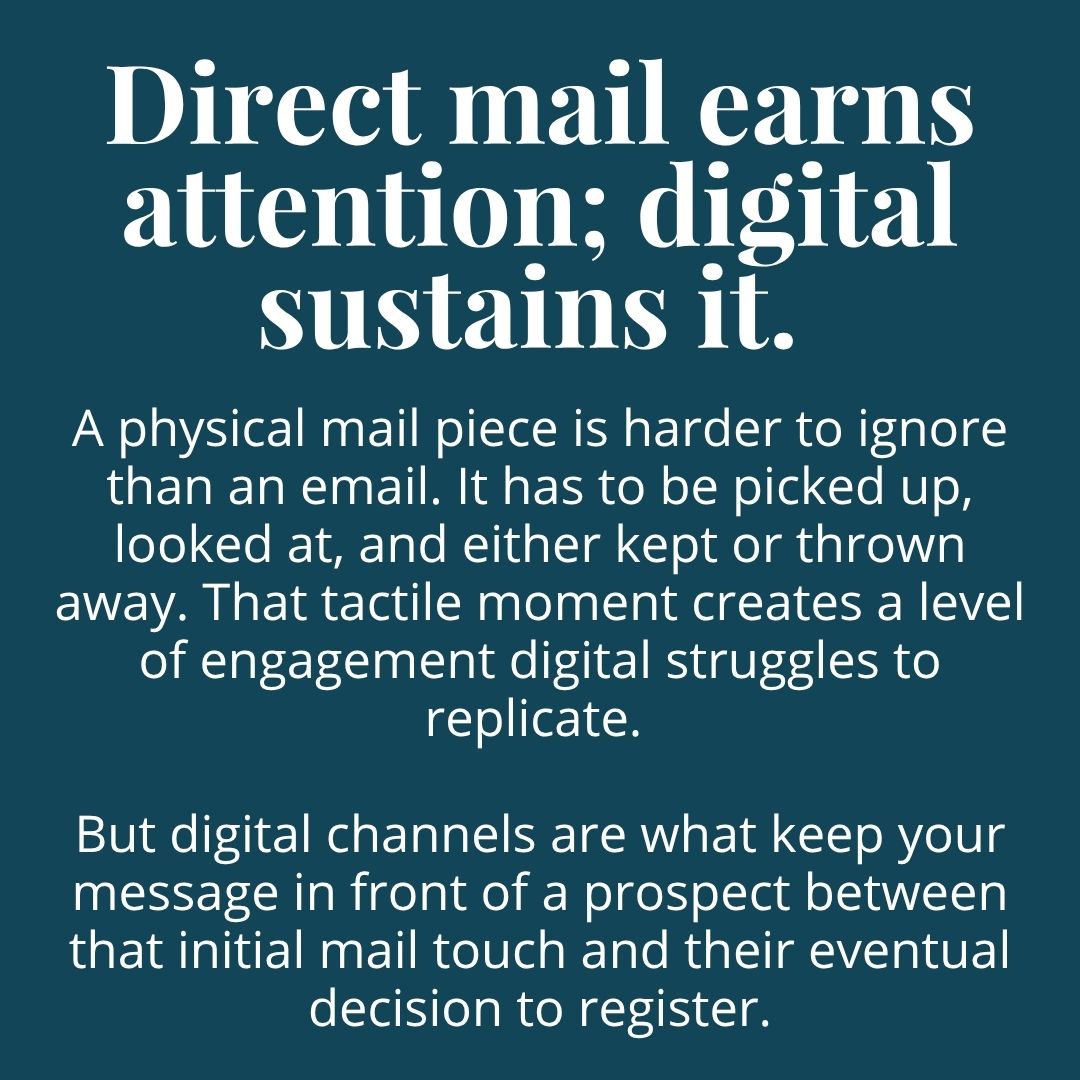
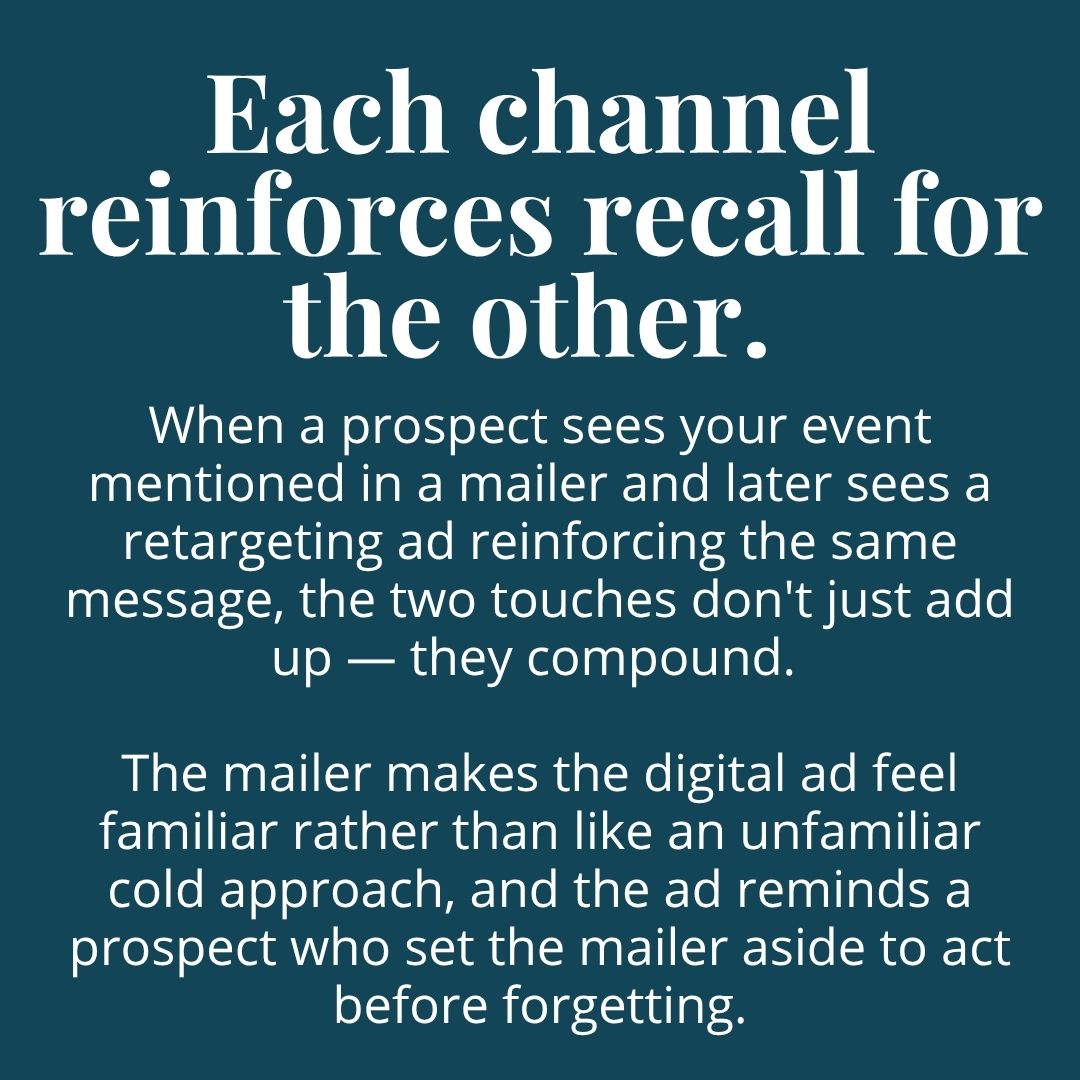
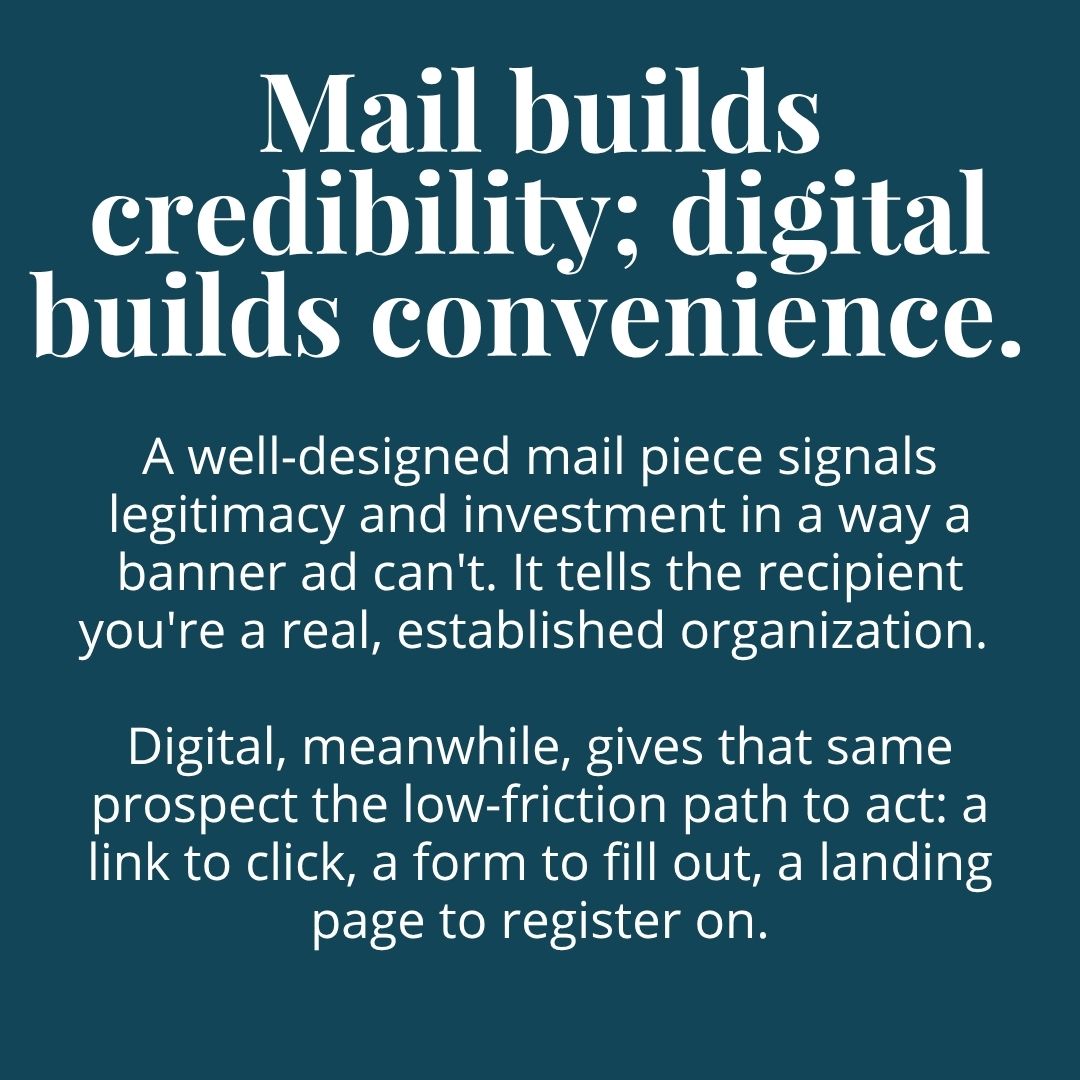
Multichannel campaigns outperform not simply because “more touches equal more attention.” It’s that digital and direct mail solve different problems at the same time:

What High-Performing Digital + Direct Mail Campaigns Look Like
The strongest event campaigns treat digital and direct mail as one coordinated system rather than two separate line items on a media plan. Here’s what that looks like in practice.
The One-Two Punch for Retirement Seminars
A financial services firm promoting a retirement planning seminar series sends a targeted, personalized mail piece to a data-qualified list of pre-retirees in the seminar’s local market. Roughly 3–5 days after the mail piece is expected to arrive, the firm activates a retargeting campaign on Facebook and Instagram aimed at the same household-matched audience segment, using creative that echoes the mailer’s core message and imagery.
Prospects who saw only the mailer had a modest response rate. Prospects who saw only the digital ads performed similarly. But prospects who were exposed to both — the mailer first, followed by the reinforcing digital ad within the mail’s in-home window — registered at a meaningfully higher rate than either channel alone, because the ad felt like a natural continuation of a message they’d already seen rather than a cold introduction.
The Birthday Countdown for Medicare T65
A Medicare agent promoting an educational seminar targets the “Turning 65” (T65) audience — individuals approaching their 65th birthday and the Initial Enrollment Period that comes with it. A personalized mail piece leads the sequence, often a formal-looking invitation referencing the recipient’s upcoming 65th birthday, timed to arrive as that milestone approaches. Digital ads follow, targeted to the same household-matched audience during the mail piece’s in-home window, reinforcing the agent’s name and educational messaging with creative that echoes the mailer.
Because the digital ads appear after the prospect has already seen the mail piece, they read as reinforcement rather than a cold introduction: “I just saw something from this agent in my mailbox, and now I’m seeing them online too.” This sequencing works especially well for the T65 audience because turning 65 is a fixed, predictable, and highly personal life event: prospects are actively looking for guidance during a narrow window, and a mail piece that speaks directly to their own birthday and eligibility date carries a level of personal relevance that digital alone can’t open with. Digital’s job is to keep that message top of mind through registration.
The QR Code Retargeting Bridge Campaign
A senior living community promoting an educational seminar, designed to help prospective residents and their adult children learn more about the community, its services, and what a move might look like, mails a postcard featuring a large, prominent QR code linked to the seminar’s registration page. Prospects who scan the code and visit the page are automatically added to a retargeting audience, ensuring they continue to see reminder ads on social platforms even if they don’t register on their first visit.
This approach closes one of the most common gaps in direct mail: the prospect who’s interested but doesn’t act immediately. Without a digital bridge like this, that interest often evaporates. With one, the community can continue nurturing that prospect through registration day, rather than losing them the moment they set the postcard down.
The common thread
Across all three examples, the campaigns succeed for the same underlying reason: the channels are sequenced deliberately, and the messaging is consistent across every touch. None of these campaigns treat mail and digital as competing budgets. They treat them as two stages of a single conversation with the same prospect.
When and How to Time Your Messages for the Best Response
Even a well-designed multichannel campaign can underperform if the timing is off. Direct mail moves at a different speed than digital, and coordinating the two requires planning backward from your event date, not simply launching both channels on the same day and hoping they land together.
Build your calendar around in-home dates, not mail dates
The single most common timing mistake is scheduling digital touches around when a mailer is sent rather than when it’s expected to arrive. Depending on mail class, a piece can take anywhere from about 2 to 10 days to reach a mailbox. Schedule your digital follow-up to launch during—or just after—that in-home window, not on the day the mail piece drops.
4–5 weeks out:
Initial mail drop announcing the event, arriving with enough runway for recipients to plan around it and time-sensitive enough to feel relevant to their situation (such as an approaching Medicare eligibility date).
3–5 days after expected in-home delivery:
Launch digital retargeting (social and/or display) to the same audience segment, using creative that visually and messaging-wise echoes the mail piece. This is the window where the “I’ve seen this before” effect is strongest.
2–3 weeks out from the event:
Split your reminder strategy by response status rather than sending a second mail piece. Attendees who’ve already registered receive a series of email reminders that confirm details and build anticipation. Recipients who received the mail piece but haven’t yet registered get a separate reminder sequence — email and/or digital retargeting — re-presenting the invitation and registration link.
Final week before the event:
A last-call push — continued email reminders for registrants (event logistics, what to expect) and a final digital nudge for non-responders who’ve engaged with prior touches but haven’t registered. This is also the point to lean on urgency messaging (limited seating, RSVP deadlines) for the non-responder segment.
Post-registration:
Don’t let the multichannel approach stop at sign-up. Multiple email touches to registrants — confirmation, reminders, and a short note the day before — meaningfully reduce no-show rates, since a registrant who goes quiet after signing up is one of the easiest no-shows to prevent.
Timing principles worth building your process around:
Sync your calendars across teams.
The most common cause of poor multichannel performance isn’t bad creative or bad targeting. It’s a mail schedule and a digital schedule being managed by two different people with two different calendars. One shared, unified campaign calendar prevents a mailer from arriving two weeks after the digital campaign has already gone cold.
Give mail enough runway.
Because physical mail takes days to arrive, plan your first touch with enough lead time that a delayed piece doesn’t miss its intended window entirely.
Don't judge a channel in isolation, and don't judge too early.
A prospect who saw a mailer and later registered from a digital ad may show up in your reporting as a “digital” conversion, but the mailer likely did real work getting them there. Track full-funnel behavior, not just last-click attribution, and give a campaign its full response window (typically several weeks) before evaluating results.
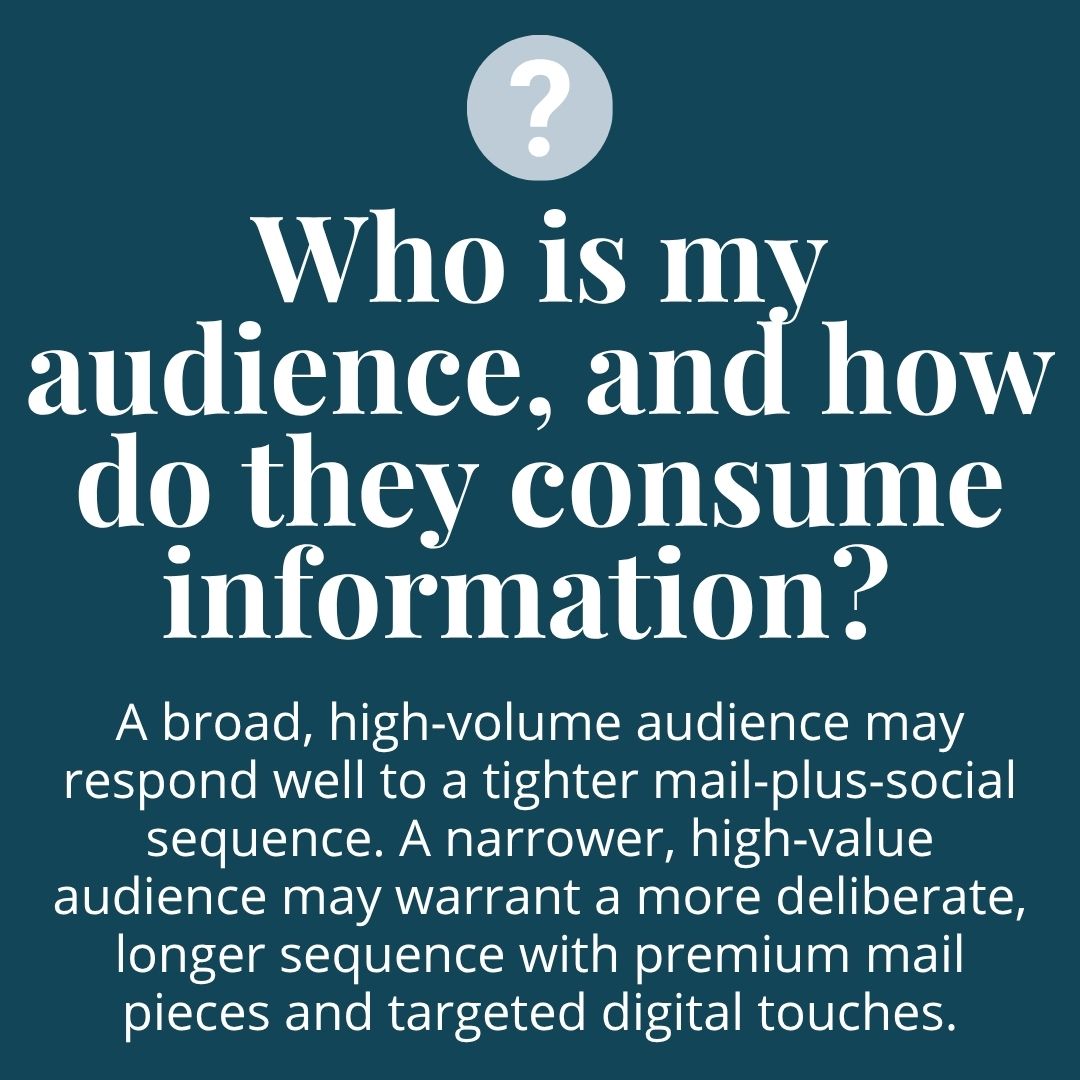
Match cadence to audience value.
A broad consumer audience can tolerate a tighter, faster sequence. A smaller, higher-value B2B or professional audience often benefits from a longer runway between touches, giving each one room to land with intention rather than urgency.
Building Your Own Multichannel Event Campaign
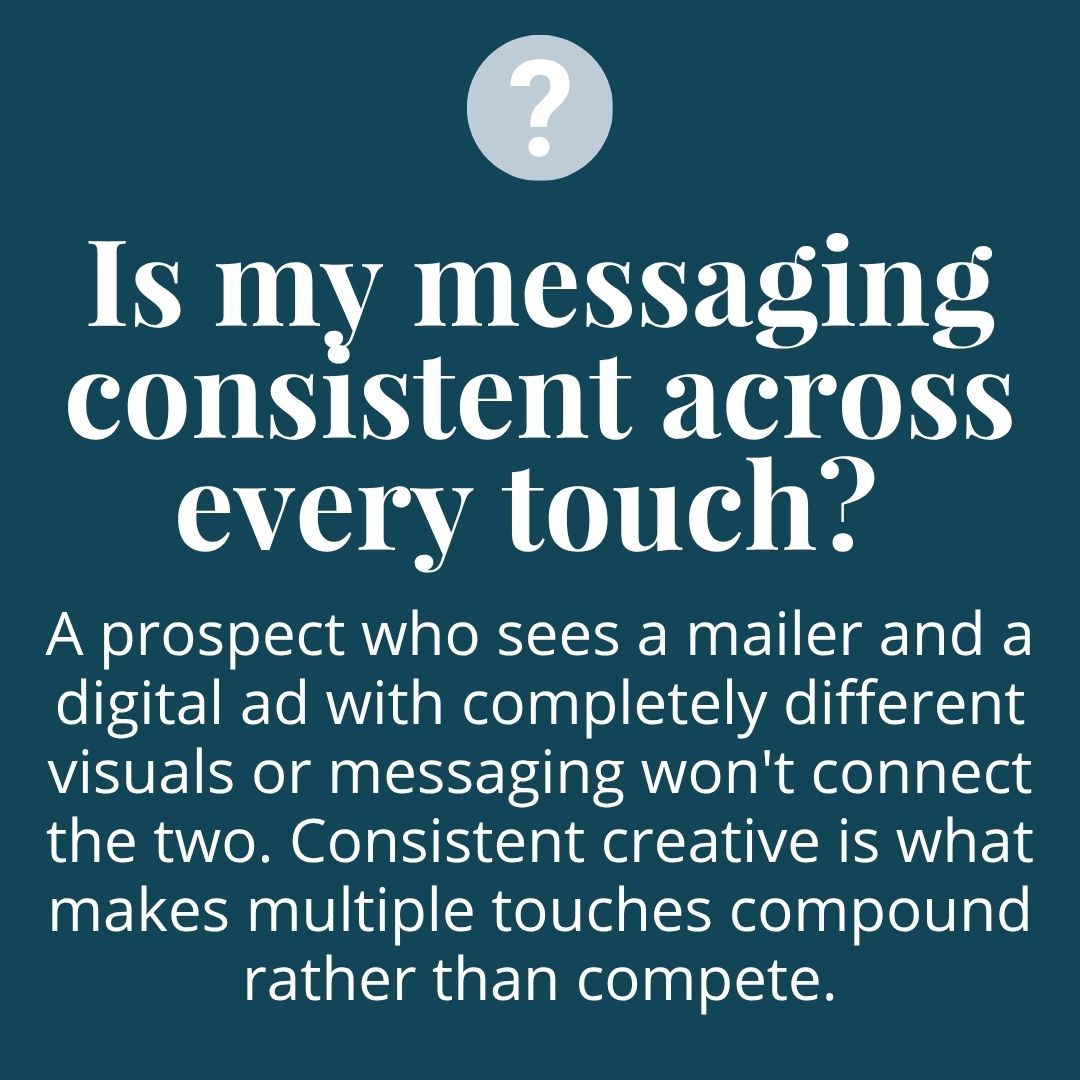
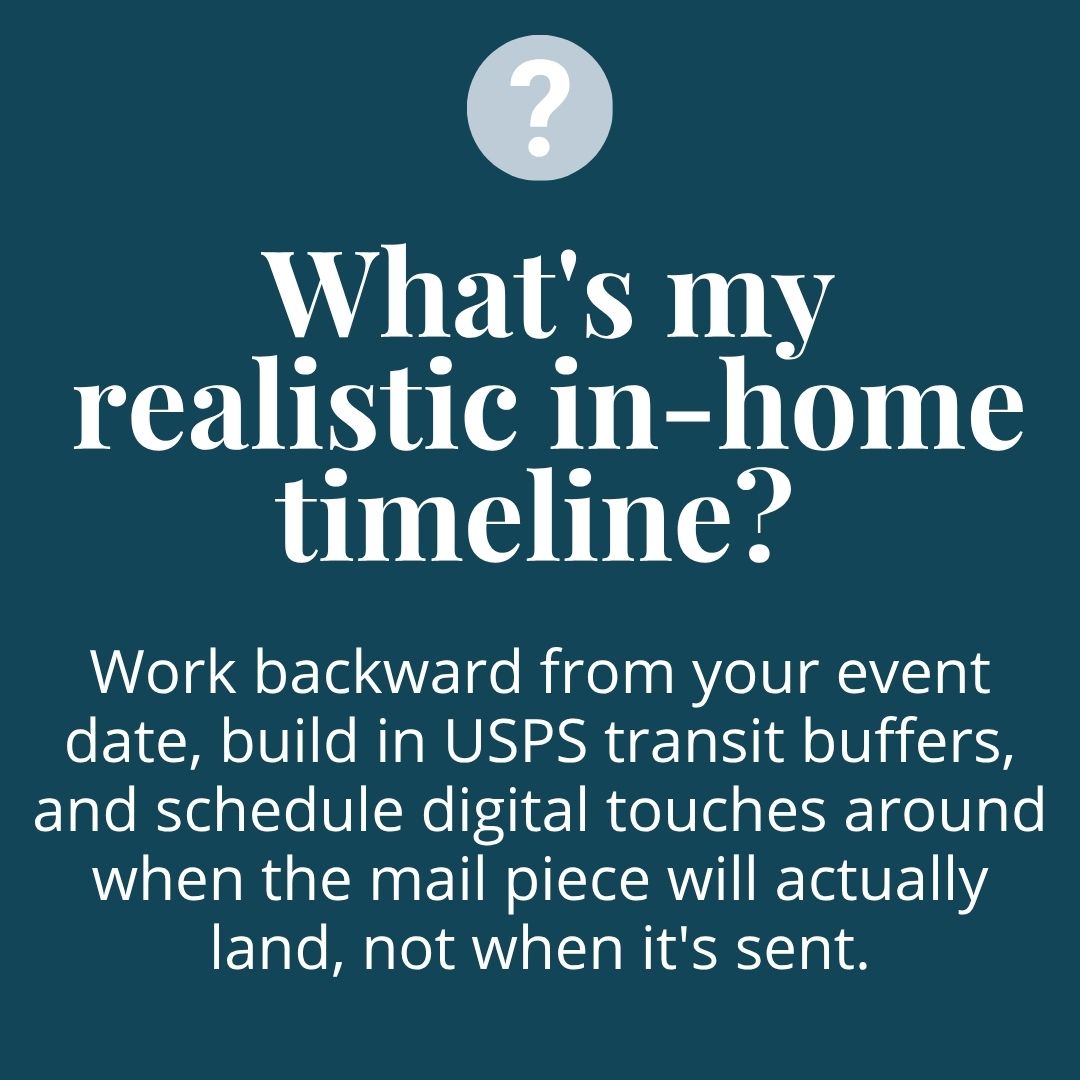
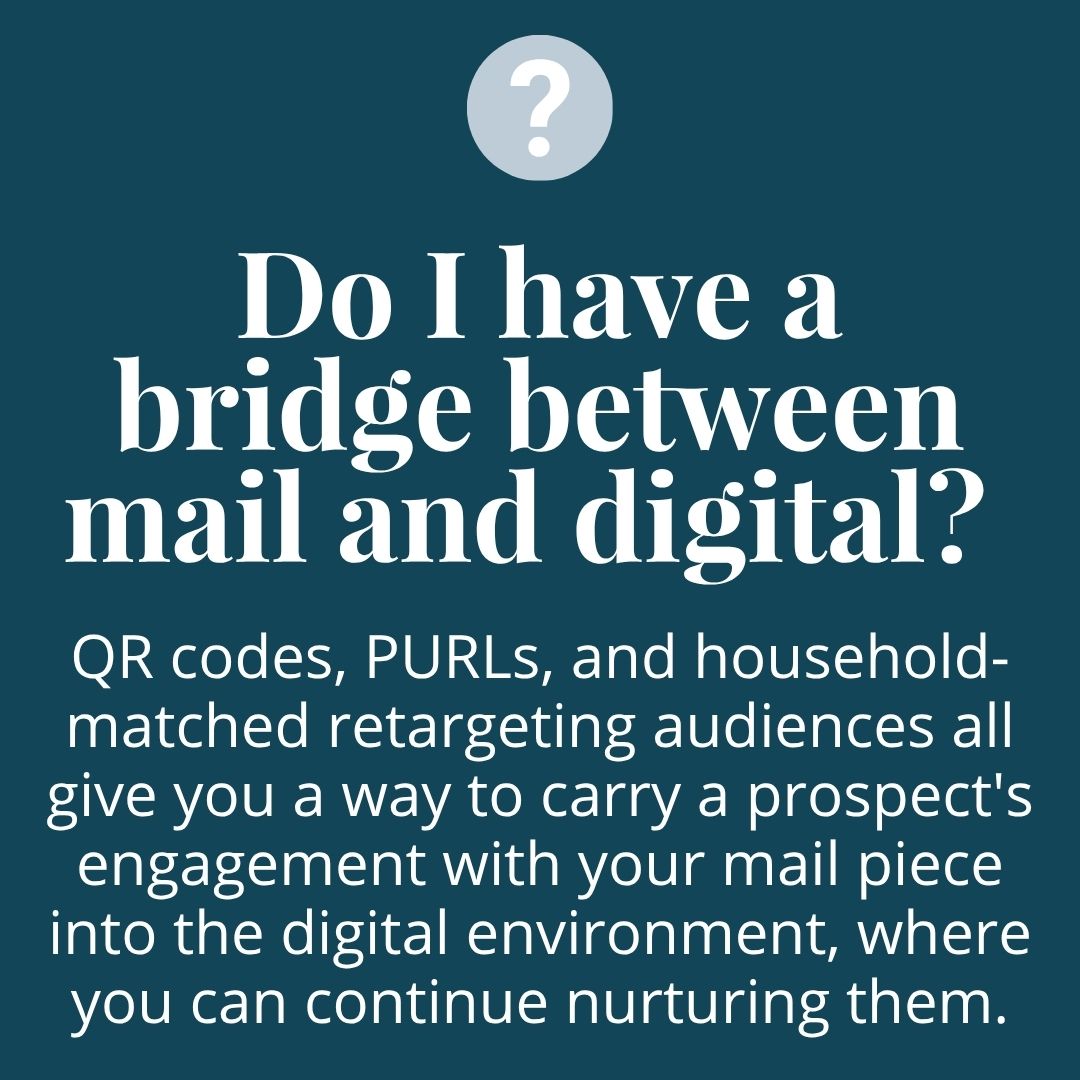
If you’re planning your next event and deciding how to allocate your budget across channels, start with these questions:
Final Thoughts
Direct mail and digital marketing are often treated as competing budget lines — a choice between “old” and “new.” The data doesn’t support that framing. The organizations getting the strongest event turnout aren’t the ones choosing between mail and digital; they’re the ones sequencing both deliberately, so each channel does what it does best: mail earns attention and builds trust, and digital sustains momentum and removes friction from the path to registration.
If your recent events have underperformed on attendance, the fix may not be a bigger budget; it may simply be a better-coordinated one.
Let's Build a Multichannel Strategy for Your Next Event
Not sure how to sequence your next campaign across mail and digital? Our team can help you map out a coordinated strategy built around your audience, timeline, and goals.
Building Compelling Event Content That Converts
The Power of Combining Digital + Direct Mail to Fill Your Events

Workshops vs. Seminars: Which Educational Format Fits Your Goals?
Closing Business At and After a Live Event

Hosting Engaging Online Events in Slower Months: Webinar Strategies for Summer Growth
Finding & Defining Your Audience
Maximize Attendance & ROI: How to Plan Seminar and Webinar Dates That Perform
Invitations Matter: How to Select the Right Format for Better Event Results
Planning Seminar & Webinar Dates for Maximum Impact