Workshops vs. Seminars: Which Educational Format Fits Your Goals?
Not all events are created equal, and choosing the wrong format can cost you more than a disappointing turnout. It can mean missed leads, weak follow-through, and a program that never builds the momentum you’re counting on.
Two of the most common formats organizations rely on for education-based marketing are workshops and seminars. On the surface, they can look similar: both bring prospects together, both position you as a trusted expert, and both create opportunities to generate leads and close business. But the way each format is structured — and the outcomes each one is built to produce — are fundamentally different.
Both are genuinely educational, topic-focused events built around real subject matter like tax strategy or estate planning — the difference isn’t in how much either one teaches; it’s in how that education is delivered. Used together, they’re complementary tools, not competing ones.
This month’s blog breaks down the real differences between workshops and seminars, when to use each, and how to decide which format will move your specific goals forward.

Workshops vs. Seminars: What’s the Difference?
The easiest way to think about the difference isn’t which format educates and which one doesn’t — both are built around real, specific-topic education.
The real difference is in structure and level of participation. A seminar is typically a one-to-many presentation. An expert speaker delivers structured, topic-focused content to an audience, covering that topic clearly within a set amount of time, with limited interaction beyond a Q&A session at the end. Seminars are designed to deliver that education efficiently and repeatably, reaching qualified people with a clear, compelling message.
A workshop, on the other hand, is built around active participation. Instead of simply listening, attendees are doing: working through exercises, applying frameworks to their own situation, asking questions throughout, and often leaving with a completed plan, document, or next step in hand. Workshops trade passive listening for active, guided application of that same kind of specific-topic content. The format requires more structure, not necessarily a smaller room.
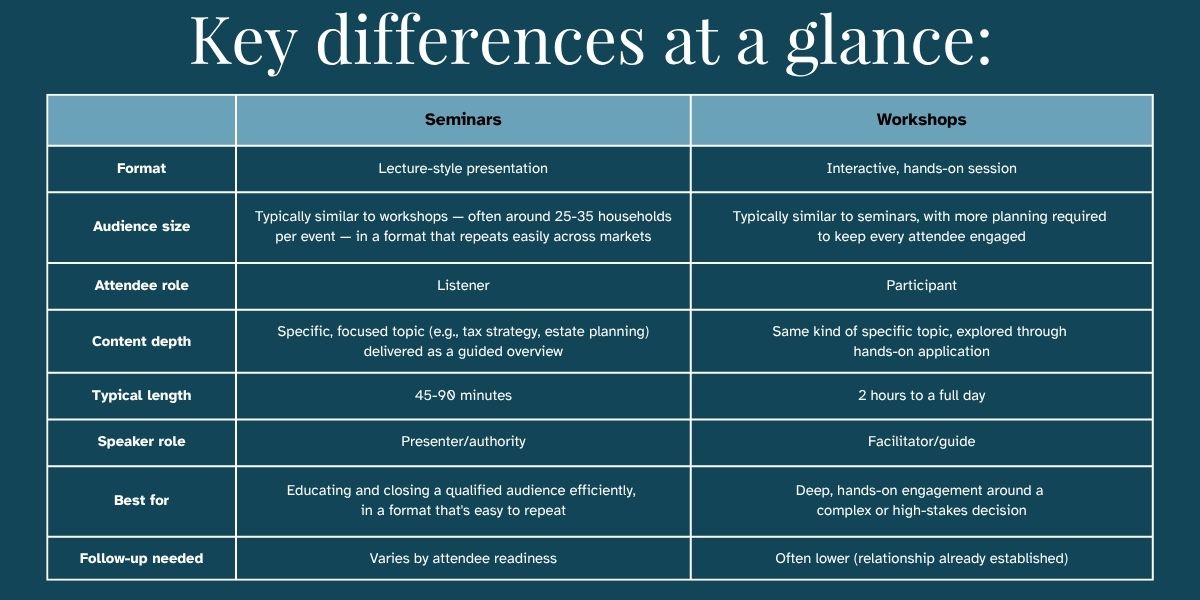
Neither format is “better” in an absolute sense. They simply serve different stages of the buyer’s journey and different business goals. The mistake most organizations make isn’t picking the “wrong” format; it’s picking a format without first being clear on what they’re actually trying to accomplish.
In fact, the strongest event marketing programs don’t choose between them at all — they use both, together, as complementary parts of the same strategy.

When to Use a Workshop Format for Deeper Engagement
Because your business is service-oriented and trust-based, every event you run is ultimately in the business of building trust. The question isn’t which format builds trust and which doesn’t; it’s which format builds the right kind of trust for where your prospect is in their decision.
Workshops build trust through demonstrated application. When a decision involves a longer sales cycle, a higher price point, or personal variables the prospect needs help working through, a workshop lets them experience your expertise firsthand by watching how your team thinks through a problem, not just hearing about it.
Workshops are the right choice when you need to:
Build deep trust before a high-stakes decision.
Qualify prospects through engagement, not just attendance.
Address complex or highly personal topics.
Create a stronger sense of reciprocity.
Shorten the path to a one-on-one appointment.
What makes a workshop actually work:
The format itself doesn’t guarantee results; the design does. The most effective workshops:
Workshops typically require more time and materials per attendee than seminars; more preparation, more hands-on tools like worksheets or plans, and more active management of the room to keep every attendee engaged, even when it’s still just one facilitator running the whole session.
But because they’re built for deeper, more individualized engagement, the return per attendee can be especially strong — not because a seminar is a lesser event, but because the two formats are designed to do different jobs.

Why Seminars Remain a Powerful Tool for Reaching Larger Audiences
Seminars aren’t a lower-intent or less educational version of a workshop — they’re an equally educational format built for efficient, repeatable delivery. A well-run seminar is a closing tool in its own right, not just a step on the way to one. Many attendees walk into a seminar already close to a decision, and a strong, specific-topic presentation with a clear call to action can move them straight into a one-on-one appointment or signed engagement, no workshop required.
Seminars remain one of the most efficient ways to introduce your expertise to a qualified audience and to educate them thoroughly on a focused topic, and to convert a meaningful share of them the same day. When the goal is efficient, repeatable education, visibility, or simply keeping your calendar full of qualified appointments, a seminar format is often the more strategic — and more scalable — choice.
Seminars are the right choice when you need to:
Educate a qualified audience efficiently.
A seminar can introduce a qualified group of households to your expertise in a single, focused session, covering the same kind of specific topic, in a format that’s simpler to plan and easier to repeat across markets and dates.
Close business directly, in volume.
Establish authority quickly.
Fill your pipeline with future business.
Maximize marketing efficiency
Because seminars can be repeated across markets with a consistent format and message, they scale more easily than workshops, which depend heavily on the facilitator’s bandwidth.
What makes a seminar actually work:
The biggest misconception about seminars is that because they’re often positioned as a one-to-many presentation, they must be a lower-intent or less educational format. In reality, a well-designed seminar educates thoroughly and closes business directly and consistently. It remains one of the highest-ROI tools available for generating both immediate appointments and long-term pipeline volume.
Workshop Success Story: How One Advisor Used Educational Workshops to Drive Over $2.5 Million in Premiums
An advisor partnered with LeadingResponse’s Non-Profit Education Workshop program, delivered in partnership with the American Financial Education Alliance (AFEA), to reach prospects through a small, structured class format rather than a traditional seminar.
The entire campaign launched from a single direct mail piece offering two class date options — a simple, low-complexity invitation compared to what a multi-touch seminar campaign typically requires.
The results:
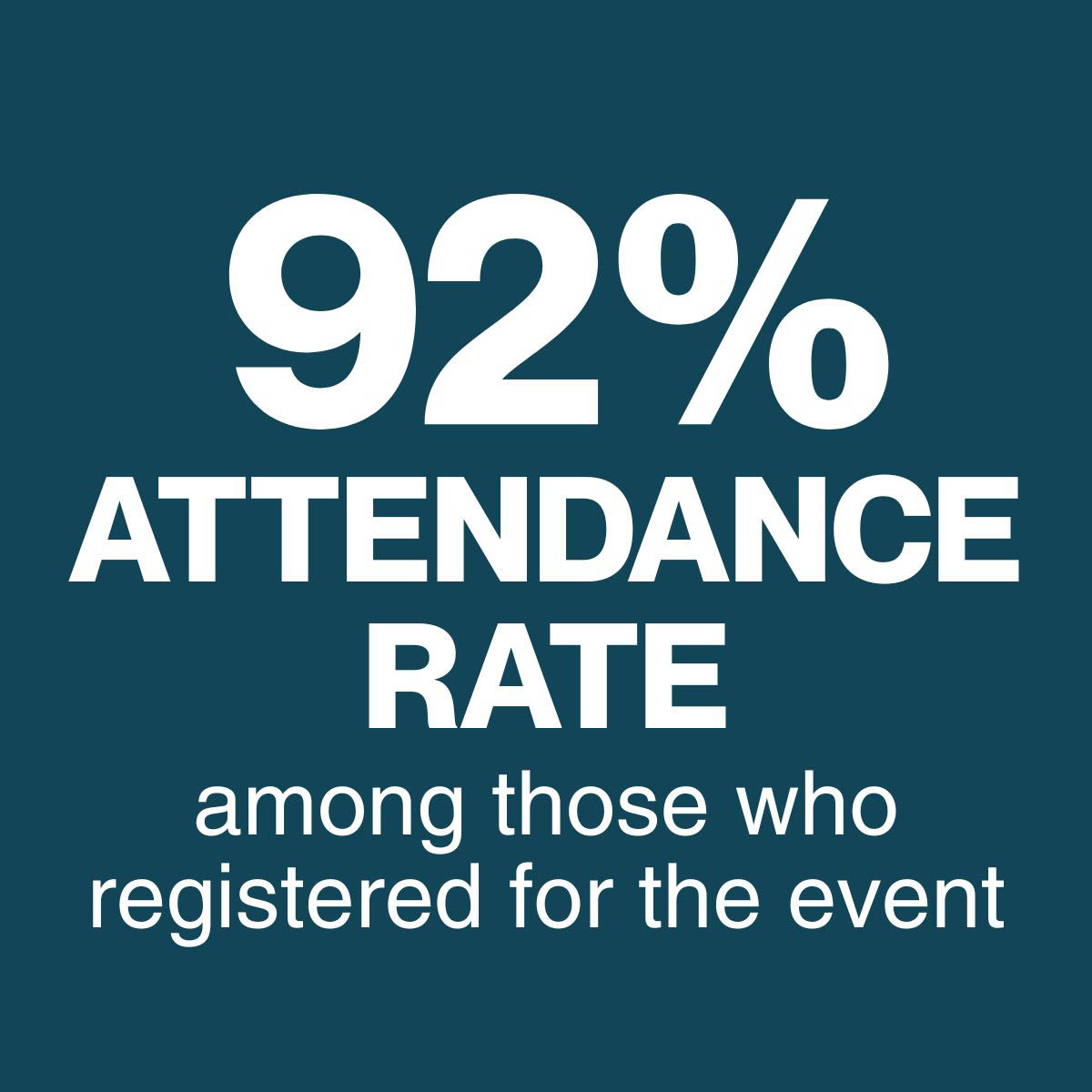
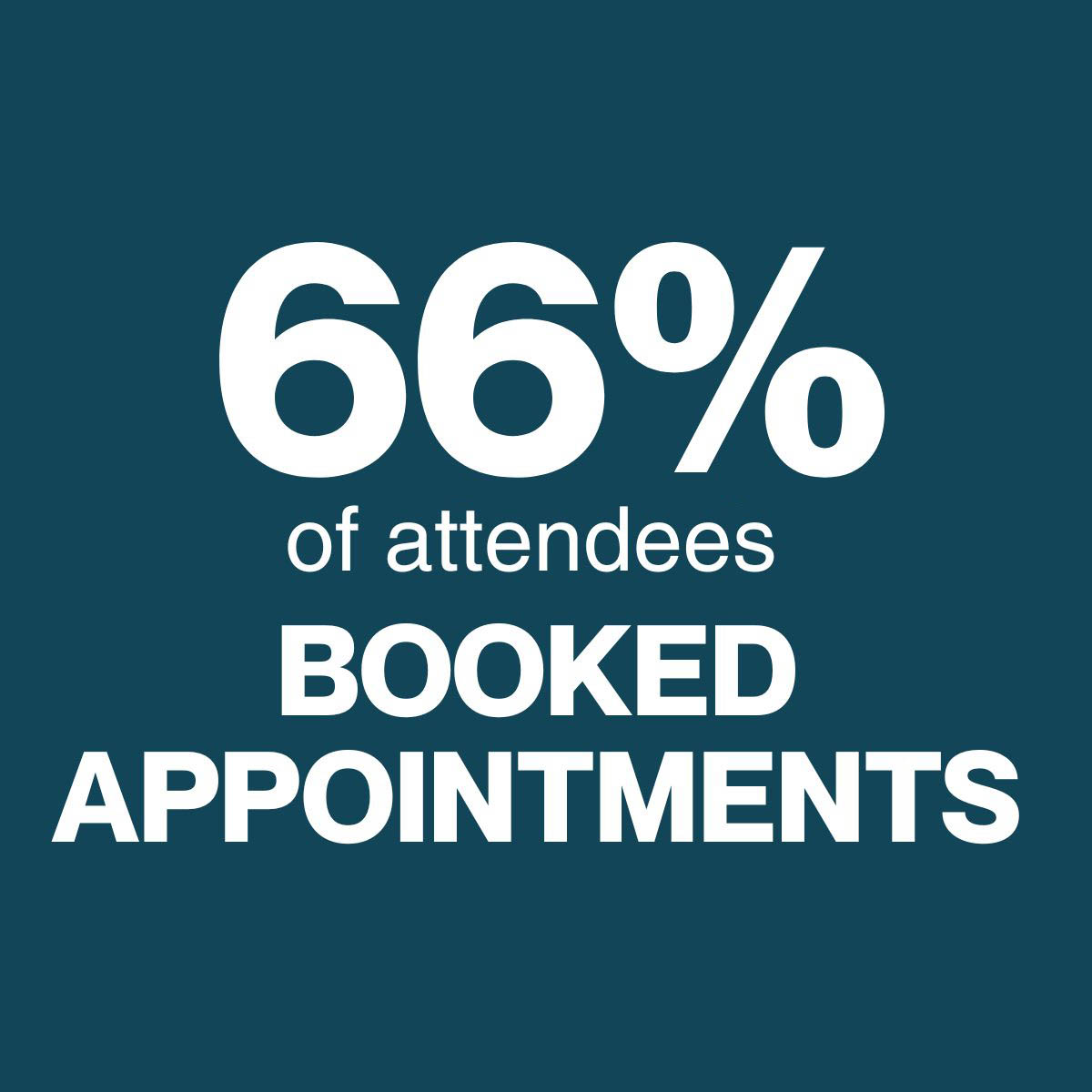

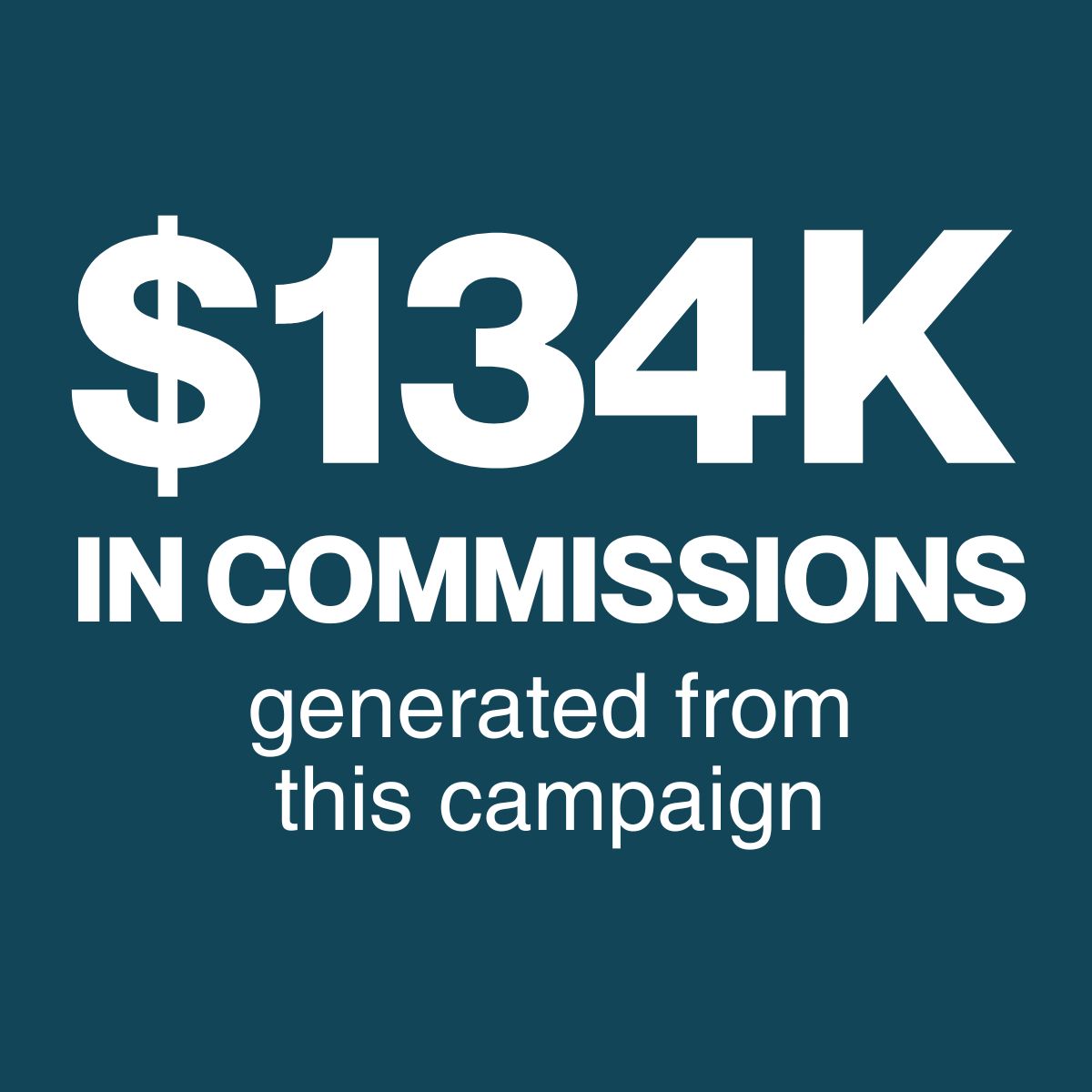
The takeaway: because the workshop format gave attendees a genuine classroom experience rather than a sales presentation, both the show-up rate and the appointment rate were exceptionally high — turning a single mailer into a multi-million-dollar result.
Seminar Success Story: A Texas Financial Advisor’s Dinner Seminar Strategy
A Texas-based financial advisor began working with LeadingResponse in 2019, having relied almost entirely on referrals up to that point. He was initially skeptical that a seminar could attract the caliber of prospect he needed. He worried about audience quality and whether a room full of strangers could ever produce serious, high-net-worth clients.
He agreed to test a controlled series of dinner seminars, targeting individuals with $500,000 or more in investable assets through data-driven invitations based on location, age, income, and investment profile. The events were hosted at upscale steakhouses and positioned as educational sessions rather than sales pitches, with branded materials and portfolio organizers reinforcing a premium, consultative experience.
The results:
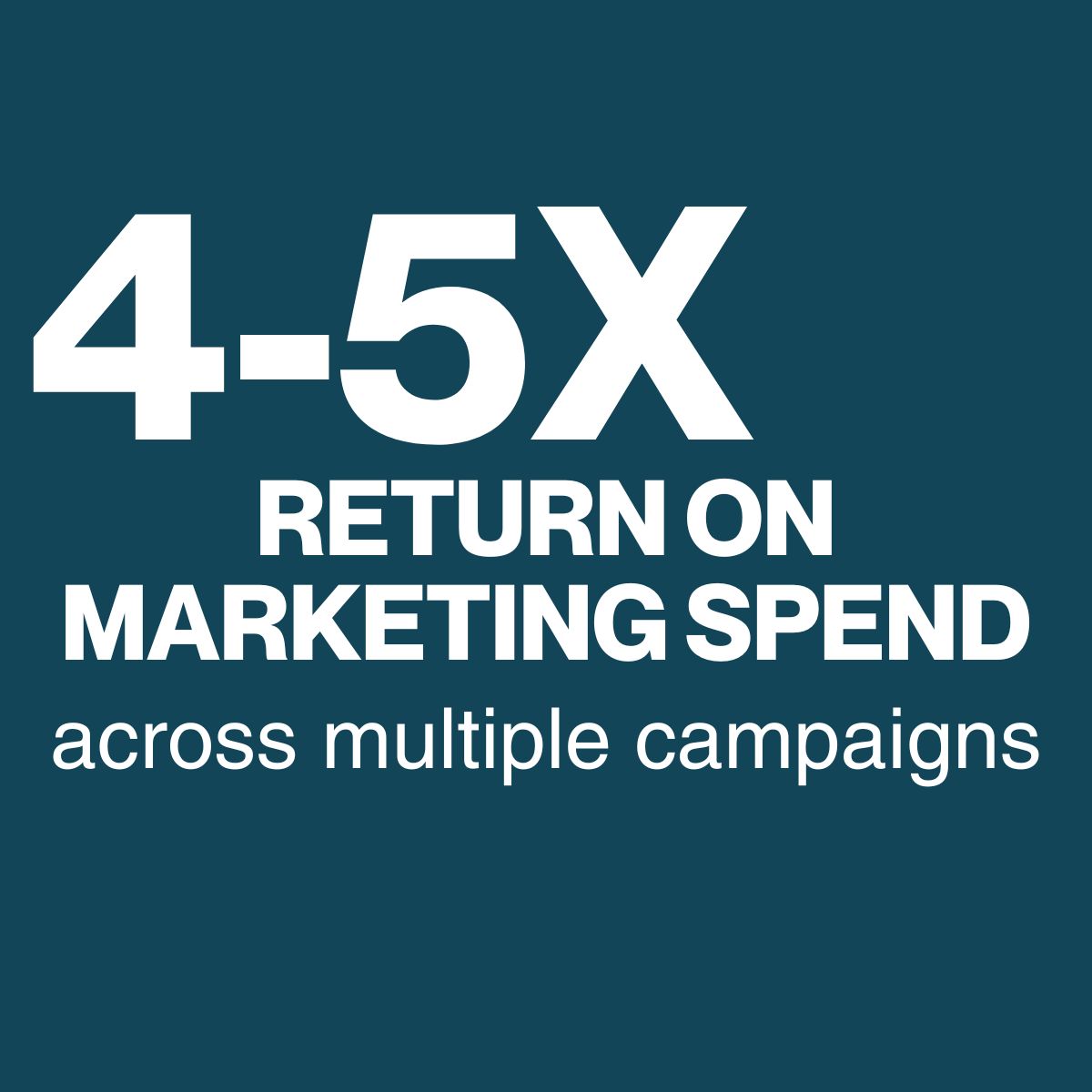
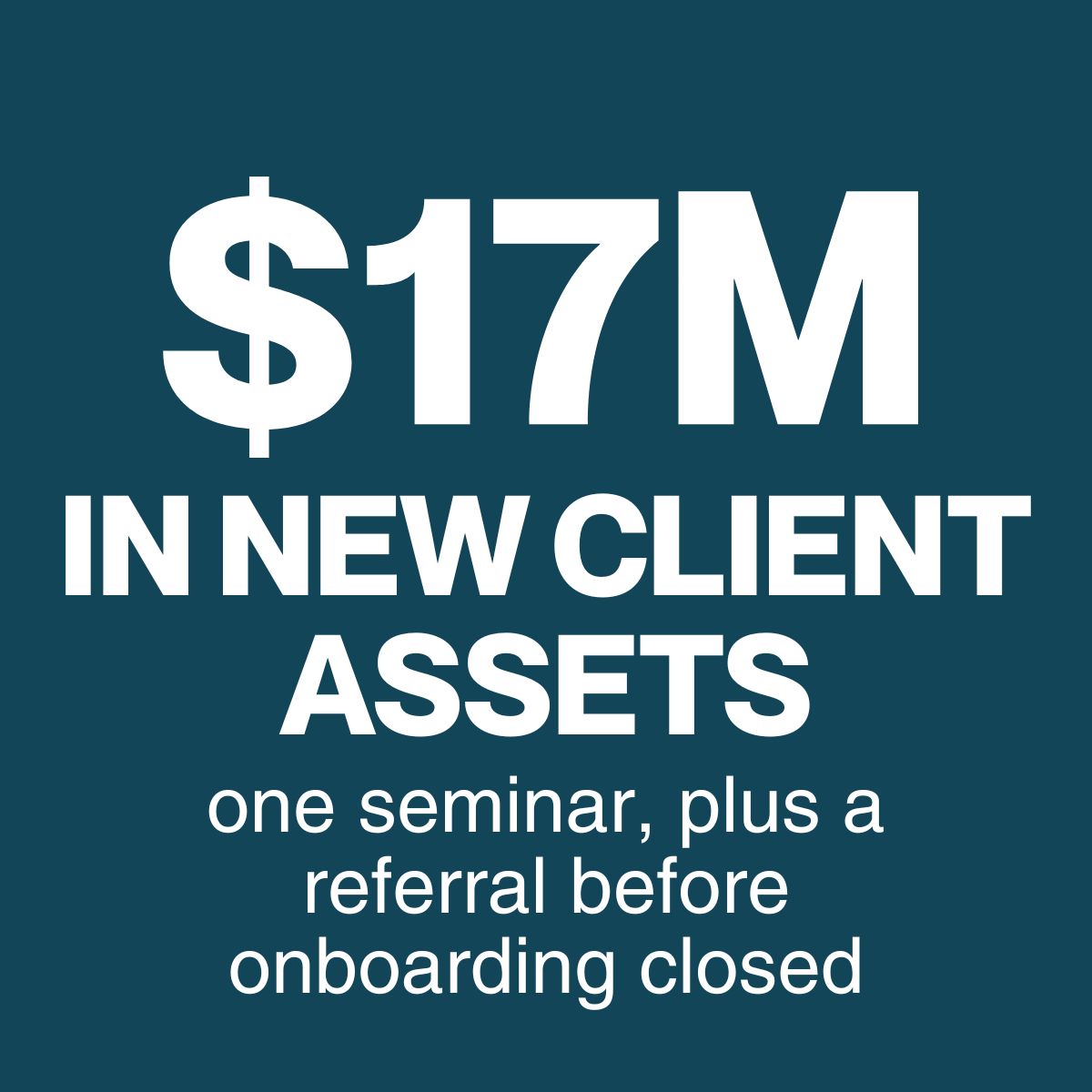
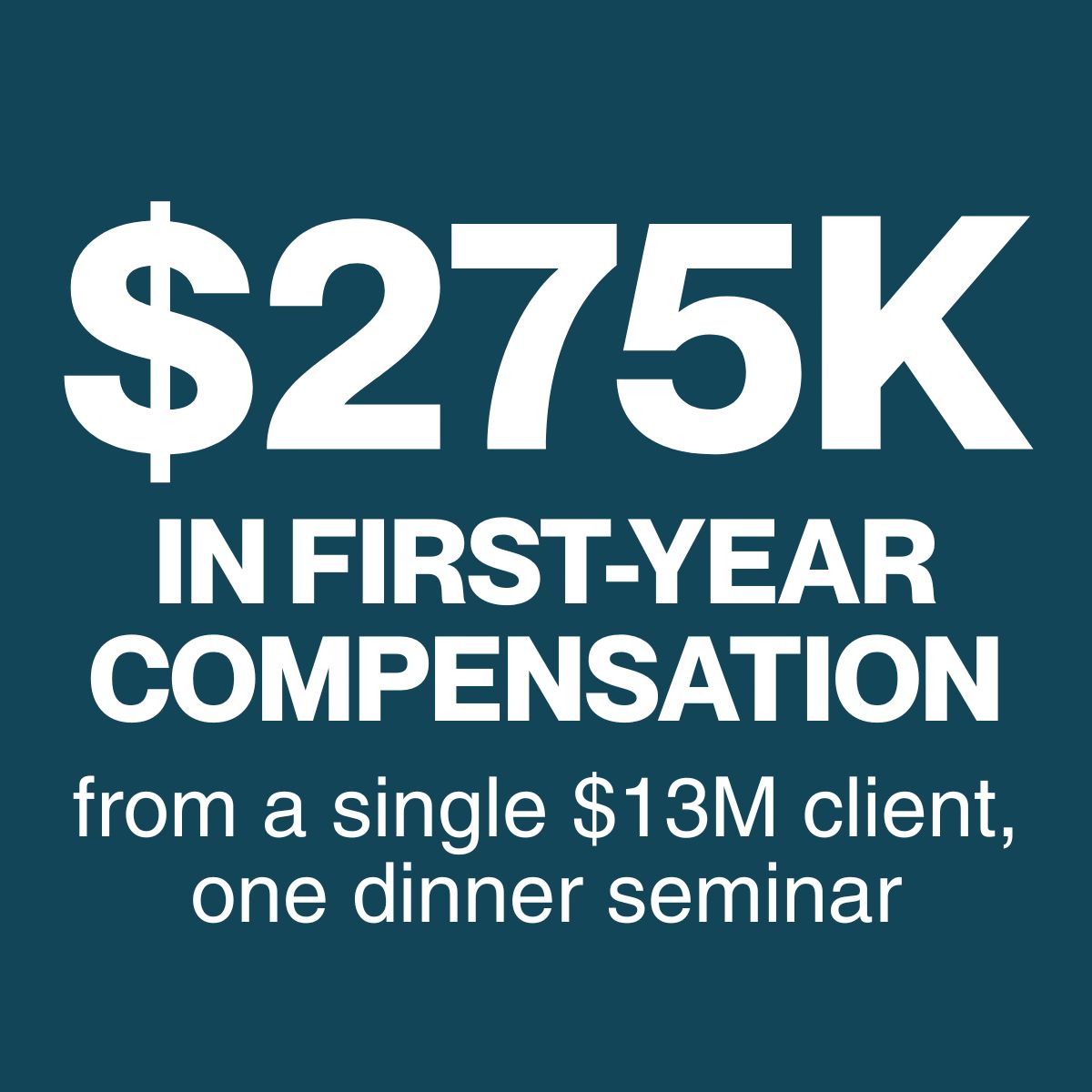
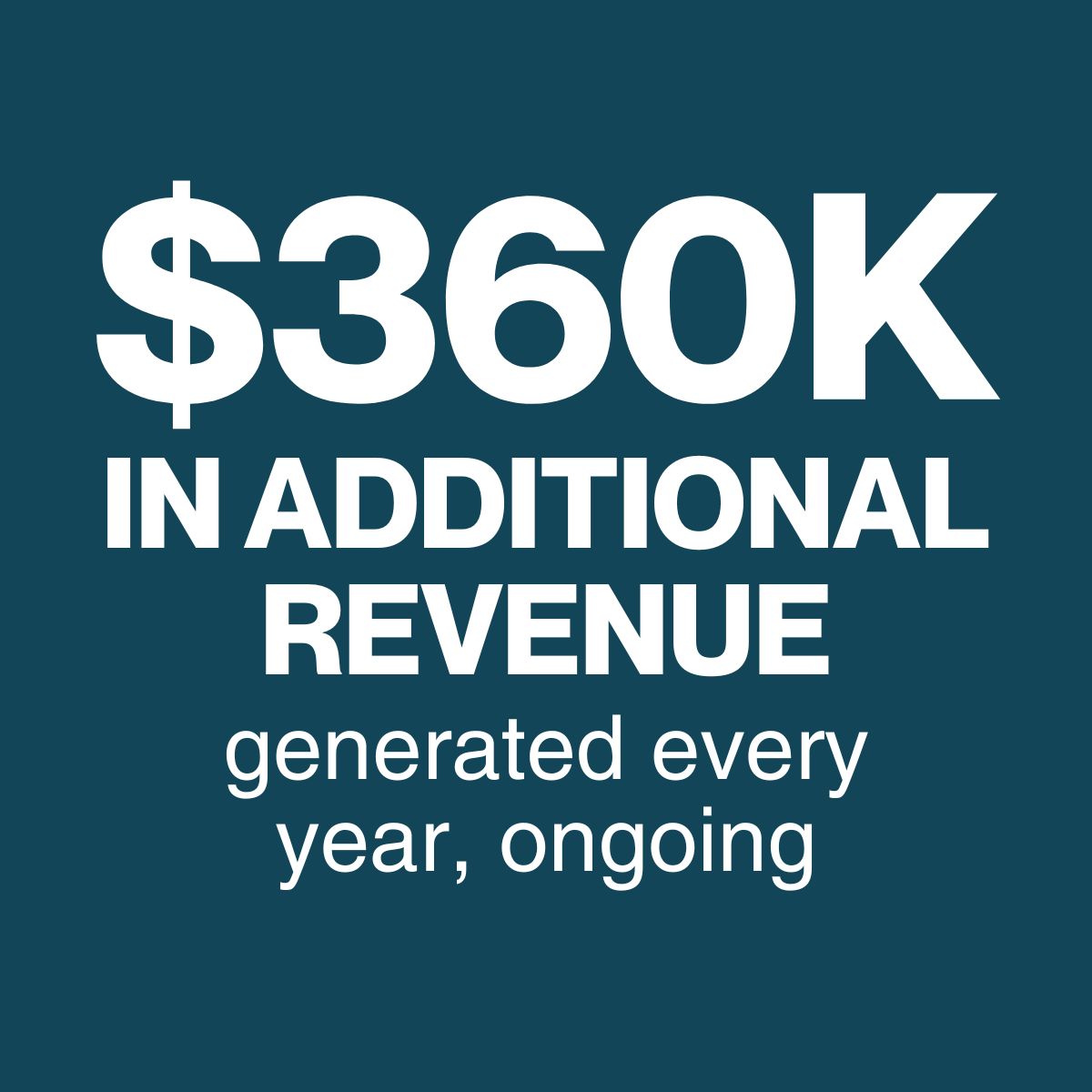
Notably, many organizations find their strongest results come from using both formats together.
Seminars to educate and close a qualified audience efficiently, and often the same day, and workshops to go deeper with prospects who need more time, more personalization, or a more complex decision worked through before they’re ready to move forward.

How to Choose the Right Format for Your Goals
If you’re still weighing which format fits your next event, ask yourself these questions:
What’s the primary goal of this event? Both formats can generate leads and close business. The real question is whether you need to reach and convert prospects efficiently at scale (seminar) or go deep on a complex or high-stakes decision through hands-on engagement (workshop).
How complex or personal is the decision your audience is facing? The more personal or high-stakes, the more a workshop’s depth will pay off.
What resources do you have available? Workshops require more preparation time and hands-on materials per attendee, even with just one facilitator; seminars scale more efficiently across markets with the same core team.
Where is your audience in their buyer journey? New, unfamiliar audiences often respond better to the lower-commitment seminar format. Warmer audiences — referrals, past attendees, existing contacts — are often ready for the deeper engagement of a workshop.
Could this be a two-step strategy? Many of the most successful programs use a seminar as the entry point and a workshop as the follow-up, capturing both scale and depth in a single overall strategy.
Final Thoughts
There’s no universal “right answer” between workshops and seminars — only the right answer for your specific goals, audience, and resources. Seminars remain unmatched for educating and closing a qualified audience efficiently, in a format that’s easy to repeat. Workshops remain unmatched for building deep, hands-on trust around a complex or high-stakes decision.
Both are capable of generating leads and closing business. They simply do it through different structures. The organizations that get the most out of their event marketing aren’t the ones that pick a single format and stick with it forever. They’re the ones that match the format to the moment, and often use both formats together as complementary parts of a single strategy.
Let's Build the Right Event Strategy for Your Goals
Building Compelling Event Content That Converts

The Power of Combining Digital + Direct Mail to Fill Your Events

Workshops vs. Seminars: Which Educational Format Fits Your Goals?
Closing Business At and After a Live Event

Hosting Engaging Online Events in Slower Months: Webinar Strategies for Summer Growth
Finding & Defining Your Audience

Maximize Attendance & ROI: How to Plan Seminar and Webinar Dates That Perform

Invitations Matter: How to Select the Right Format for Better Event Results

Planning Seminar & Webinar Dates for Maximum Impact